Queer Places:
Harrow School, 5 High St, Harrow HA1 3HP, United Kingdom
University of Cambridge, 4 Mill Ln, Cambridge CB2 1RZ
Whittingehame Estate, Whittingehame Estate, Haddington EH41 4QA, United Kingdom
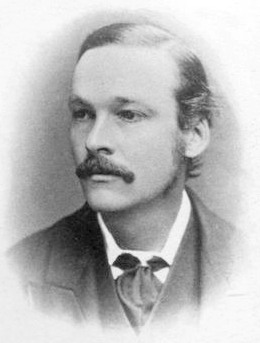 Francis Maitland Balfour (November 10, 1851 – July 19, 1882) was an eminent British zoologist and evolutionary embryologist. Regarded by Charles Darwin and his
contemporaries as one of the most brilliant biological minds of his generation, Balfour laid fundamental foundations for the field of comparative embryology.
Francis Maitland Balfour (November 10, 1851 – July 19, 1882) was an eminent British zoologist and evolutionary embryologist. Regarded by Charles Darwin and his
contemporaries as one of the most brilliant biological minds of his generation, Balfour laid fundamental foundations for the field of comparative embryology.
Born in Edinburgh, Scotland, Francis was the third son of James Maitland Balfour, a Scottish landowner and MP, and Lady Blanche Gascoyne-Cecil. His older brother was
Arthur James Balfour, who later served as Prime Minister of the United Kingdom.
He attended Harrow School, where he developed a keen interest in natural science and geology, largely cultivated by his mother and his teacher George Griffith.
In 1870, Balfour entered Trinity College, Cambridge. After attending lectures by the physiologist Sir Michael Foster, he turned his focus to animal morphology and
embryology. He earned second place in the Natural Science Tripos in 1873.
After graduating, Balfour carried out extensive research at the Stazione Zoologica in Naples. His work focused on the embryonic development of elasmobranch fishes (sharks
and skates), shedding light on the origin of vertebrate urogenital organs and spinal nerves.
He was elected a Fellow of Trinity College in 1874. In 1878, he published A Monograph on the Development of Elasmobranch Fishes. His magnum opus, the two-volume A
Treatise on Comparative Embryology (1880–1881), systematically organized embryological research and earned him international acclaim.
In recognition of his stature—and after he turned down prestigious offers from Oxford and Edinburgh to remain at Cambridge—the University created a special Chair of
Animal Morphology specifically for him in the spring of 1882.
In July 1882, while recovering from a bout of typhoid fever, Balfour traveled to the Swiss Alps. On 19 July 1882, at age 30, he and his guide fell to their deaths while
attempting the unscaled peak of the Aiguille Blanche of Mont Blanc.
The Cambridge Apostles was a secret intellectual society founded at Cambridge University. Francis Maitland Balfour
belonged to the elite Cambridge academic circles associated with the group—and his brothers, such as
Gerald Balfour and Arthur James Balfour, as well as close family
associates were also members. Francis himself is primarily remembered for his central involvement in Trinity College’s Natural Sciences community.
Historical records and scientific biographies focus primarily on Francis Maitland Balfour's rapid academic rise, extensive anatomical publications, and premature death in
the Alps. There are no explicit primary accounts or confirmed historical documentation detailing his private romantic life or specifying a gay/LGBTQ identity.
Speculation or discussion surrounding sexual orientation regarding members of the Balfour family in Victorian historical literature often centers on his older brother,
Arthur James Balfour (who remained a lifelong bachelor). Where individual Victorian figures left no married estate or public romantic records, modern social historians
sometimes explore these circles within the broader history of bachelorhood and Cambridge intellectual intimacy, though in Francis's case, his life was cut short at age 30
before many such personal records were established.
References:
Other references:
- Balfour, Francis Maitland. A Monograph on the Development of Elasmobranch Fishes. London: Macmillan and Co., 1878.
- Balfour, Francis Maitland. A Treatise on Comparative Embryology. 2 vols. London: Macmillan and Co., 1880–1881.
- Foster, Michael, and Adam Sedgwick (eds.). The Works of Francis Maitland Balfour. 4 vols. London: Macmillan and Co., 1885.
- Hall, Brian K. "Francis Maitland Balfour (1851–1882): A Founder of Evolutionary Embryology." Journal of Experimental Zoology Part B: Molecular and Developmental Evolution 299, no. 1 (2003): 3–8.
- Geison, Gerald L. Michael Foster and the Cambridge School of Physiology: The Scientific Enterprise in Late Victorian Society. Princeton, NJ: Princeton University Press, 1978.
- Clark, John Willis. Old Friends at Cambridge and Elsewhere. London: Macmillan and Co., 1900.
- Lubenow, W. C. The Cambridge Apostles, 1820–1914: Liberalism, Imagination, and Friendship in British Intellectual and Professional Life. Cambridge: Cambridge University Press, 1998.
- Sidgwick, Arthur, and Eleanor Mildmay Sidgwick. Henry Sidgwick: A Memoir. London: Macmillan and Co., 1906.
- Deslandes, Paul R. Oxbridge Men: British Masculinity and the Undergraduate Experience, 1850–1920. Bloomington: Indiana University Press, 2005.
Support this project
This website is a passion project researched, developed, and funded entirely by me. If you find the content valuable and would like to help support the ongoing research and hosting costs, any contribution is deeply appreciated.
Thank you for keeping this independent resource alive!
My books on Amazon: Elisa Rolle's books
BACK TO HOME PAGE
